
Medical Waste Disposal Nationwide
Get a free quote for a complete medical waste disposal solution tailored to your facility—anywhere in the United States.
MEDICAL WASTE MANAGEMENT
Eco Medical is here for all of your medical waste disposal needs.
Whether you are a large or small generator of biohazard waste, Eco Medical offers medical waste disposal tailored to your facility nationwide — with deep California operating experience since 2013.
TYPES
Medical Waste Disposal and Management
Eco Medical Waste Disposal will:
- Communicate to understand your biohazard disposal needs
- Offer an all inclusive “pick up” price at a frequency that is compliant with state and local laws
- Send you your compliance login and provide manifests for tracking and certifications of destruction
- Supply you with biohazard containers
- Haul away your biomedical waste and dispose of it with compliance
- Have local service representatives readily available to answer your calls
OVERVIEW
What is Medical Waste?
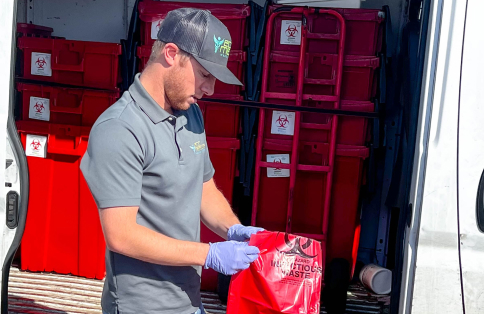
Medical waste is regulated waste generated in the diagnosis, treatment, immunization, or care of humans or animals—typically biohazard, pathology, pharmaceutical, or trace chemotherapy waste that is not regulated as hazardous waste under the federal Resource Conservation and Recovery Act (RCRA). Definitions and rules vary by state. Of all healthcare waste generated, about 15 to 25% is regulated medical waste or infectious waste and may contain potentially infectious agents. Red biohazard containers and bags are used in healthcare to properly dispose of needles, sharps, syringes, personal protective equipment, and other materials contaminated with blood or other potentially infectious materials (OPIMs).
CATEGORIES
Biohazard Waste Types
Liquid Biohazardous Waste
Bulk quantities of blood, blood products, or bodily fluids contaminated with animal or human blood.
Solid Biohazardous Waste
Any non-sharps solid waste contaminated with blood or OPIMs such as contaminated PPE, culture plates, and pipettes.
Sharps Biohazardous Waste
Any device capable of puncturing through skin that is contaminated with biological materials with a risk of transmission of infectious disease such as used needles, syringes, and scalpels.
Pathological Waste
Any unfixed human organs, tissues, or body parts (excluding teeth) that are deemed a biological risk such as human tissue, contaminated animal carcasses, and organs.
Medical Waste Types
The World Health Organization identifies the following types of medical waste: infectious , pathological , sharps , chemical , pharmaceutical , cytotoxic , radioactive , and general waste. For the purposes of medical waste disposal and management, including using the correct containers for each waste stream.
Regulated Medical Waste
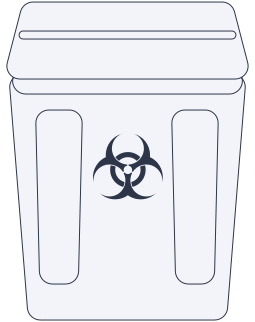
Biohazardous Waste
Any waste contaminated with potentially infectious materials such as blood and blood products, body fluids with visible blood, and contaminated PPE.
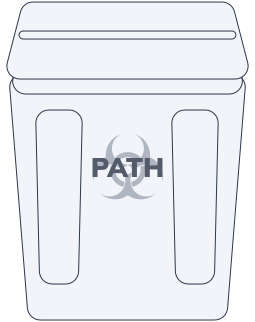
Pathological Waste
Any tissues, organs, body parts, or materials involved in surgery, autopsy, and other medical procedures.
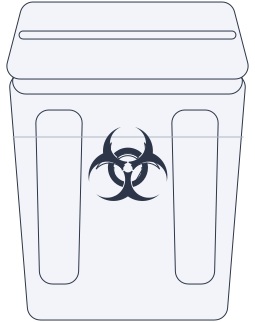
Sharps Waste
Any medical device or material capable of piercing skin and transmitting infectious disease such as needles, lancets, or syringes.
Chemotherapy Waste
Any waste used in administration of chemotherapeutic agents, that contains trace amounts of chemotherapy drugs.
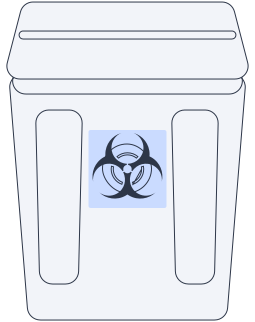
Other Waste in Healthcare Settings
Pharmaceutical Waste
Unused over the counter drugs or medications that are not hazardous as defined by the RCRA.
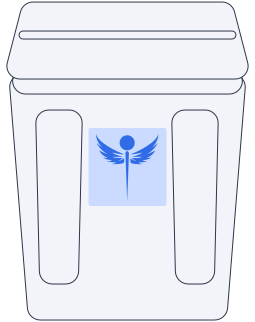
Hazardous Waste
Any waste defined as hazardous waste by the RCRA such as chemical waste and hazardous waste pharmaceuticals.
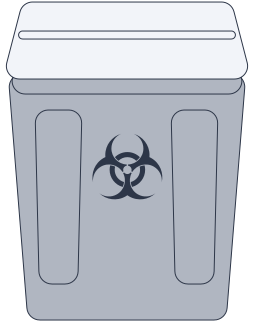
Non Hazardous Waste
Regular waste generated from trash items like plastic wrappings, office paper, floor sweepings, paper towels, and other regular waste generated.
OVERVIEW
Different Names for Medical Waste
There are many terms for medical waste that often refer to the same thing - medical waste stream that may be contaminated by blood, body fluids, or other potentially infectious materials and poses significant health hazards. Each of these terms can be used in substitute of another, and will differ depending on your location.
- Medical waste
- Regulated medical waste
- Clinical waste
- Biomedical waste
- Laboratory Waste
- Biohazard waste
- Healthcare waste
WE WANT TO HELP
Medical Waste Regulations
Environmental Protection Agency
Regulations regarding the safety of human and environmental health, including medical waste handling and disposal.
Occupational Safety and Health Administration
Regulations which ensure safety of workers with occupational exposure to hazardous materials, including regulated and hazardous medical waste.
Drug Enforcement Agency
Regulations regarding the disposal and storage of controlled substances such as some prescription medications.
U.S. Department of Transportation
Regulations related to the packaging, labeling, and transportation of medical waste.
Centers for Disease Control
Regulations related to reducing the risk of spreading diseases when handling and disposing of medical waste.
What happens to Medical Waste?
Medical waste is generated by healthcare facilities or medical research facilities, placed into the appropriate waste container, and stored in an accumulation area before it is transported to a treatment facility and undergoes a treatment method to kill any pathogens in infectious medical waste so the treated waste is no longer a health or environmental hazard.
#1 CA WASTE MANAGEMENT
How to dispose of Medical Waste
Be knowledgeable on all state regulations and guidelines
Regulations differ from state to state. Ensure you are abiding by all state and federal regulations.
Wear personal protective equipment (PPE)
Whenever there is occupational exposure, appropriate PPE such as gloves, gowns, coats, and any other necessary protections.
Provide all necessary trainings
Properly classifying, handling, and storing medical waste all starts with training your healthcare workers. RMW training and bloodborne pathogens trainings are 2 essential trainings.
Waste Segregation
Each waste stream has a specific storage container to protect waste workers and ensure the medical wastes are appropriately treated for disposal. Color coding containers is an easy way to properly segregate wastes.
Ensure all containers are compliant and labeled appropriately
Containers have specific regulations and labels. For example, sharps containers have a fill line at 3/4ths of the container and must be sealed for disposal.
Store your waste in a designated accumulation area
Your medical waste containers should be kept in a designated accumulation area which prevents access from unauthorized personnel.
Pay attention to accumulation times
Each stream of waste has a specific accumulation time to abide by. Medical waste must be transported for treatment within a compliant timeframe.
Hire the right medical waste disposal company
They will have medical waste disposal services and do medical waste pickups at a compliant frequency and can provide advice on compliant practices.
Retain all necessary documentation
Maintain all certificates of training, tracking records, and destruction records. Depending on your state and size of your facility, you may need to retain tracking and destruction documents for waste management for 3 years.
OUR PRACTICE
Medical Waste Management
Off-Site treatment
A medical waste disposal company will pick up and haul away your medical waste at a frequency of your choosing. This is the most popular method of medical waste disposal for healthcare.
Mail back Solution
You will package up your medical waste and mail it away for treatment
On-Site Treatment
The waste generator will have all the necessary specialized equipment, trained personnel, and expertise on site to do medical waste treatment and disposal on site.
OUR PRACTICE
Medical Waste Treatment Methods
Most commonly, medical waste disposal services will pickup your waste and take it to a treatment facility. Medical waste can not go to regular landfills without being properly disinfected. The process involves sterilizing the waste streams to kill any infectious agents. Here are the most common treatment methods:
Incineration
Incineration involves burning medical waste at extremely high temperatures. The waste is loaded into an incinerator and burned at over 800 degrees Celsius.
Autoclave
Autoclaves use steam sterilization and high pressure to kill infectious agents. Steam sterilization is performed using boiling water and is trapped by the autoclave to create pressure and kill any microorganisms.
Chemical
Sterilization of medical waste using chemical treatment such as soaking the waste in a solution or using a sealed chamber and chemical gasses.
Microwaving
Disinfecting waste using electromagnetic waves which vibrate and create heat to kill pathogens.
Sources
Medical Waste Resources
Medical Waste Management Act — California Health and Safety Code Sections 117600 - 118360 covers everything you need to know about managing clinical waste in California.
Healthcare Environment Resources — State-by-State Regulated Medical Waste Resource Locator.
Environmental Compliance Assistance Platform — California Medical Waste.
CONCTACT US
Have a question? Our team is happy to assist you!
Get a free quote for a complete medical waste disposal solution tailored to your facility—anywhere in the United States.
Sales Number (707) 840-3423Medical Waste Disposal Quote
Let's get started
Get compliant medical waste disposal tailored to your facility—anywhere in the United States. Request a free quote and we'll help you get set up quickly.