
Chemotherapy Waste Disposal Nationwide
Get a free quote for trace and bulk chemotherapy waste disposal tailored to your facility—anywhere in the United States.
TYPES
Types of Chemotherapy Waste
There are two types of chemotherapy waste: bulk chemotherapy waste and trace chemotherapy waste. For proper medical waste management, it is crucial you segregate each into the proper container.
Trace Chemotherapy Waste
Trace chemotherapy waste is any waste with trace amounts of chemotherapeutic agents, typically from items used in the administration of a chemotherapy drug. As a medical waste generator of hazardous chemotherapy waste, you will be responsible for the waste you generate from cradle to grave in accordance with the Resource Conservation and Recovery Act (RCRA). Step 1 to proper disposal of chemotherapy waste is classifying the waste stream.
Examples of trace chemotherapy waste can include:
Personal protective equipment (PPE) such as gloves, gowns, and masks
IV bags and tubing
Sharps waste such as syringes
Wipes or pads
Infusion ports
TYPES
Pharmaceutical Waste
There are 2 types of pharmaceutical waste: hazardous and non-hazardous. Proper disposal means following applicable state medical waste rules and the federal Resource Conservation and Recovery Act (RCRA). California generators also follow the California Medical Waste Management Act.
Chemotherapy Waste Containers
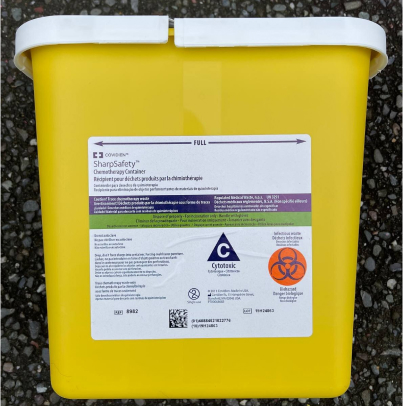
Proper disposal for trace chemotherapy waste typically uses a yellow container. If sharps are used in chemotherapy administration, segregate them into sharps containers designated for trace chemotherapy waste. Confirm container and labeling rules for your state.
Bulk Chemotherapy Waste
Bulk chemotherapy waste is chemotherapy waste that contains more than just a trace or residual amount of chemotherapeutic agents. Bulk chemo waste is a hazardous waste and waste disposal involves following strict state and federal regulations. Bulk chemo wastes need to be disposed of using black RCRA hazardous waste containers.
Examples of bulk chemotherapy waste can include:
Materials used to clean up spills
IV bags that are not empty
Personal protective equipment that is soaked in chemotherapy wastes
Hazardous pharmaceutical waste
DIFFERENCES
Trace Chemo Waste vs Bulk Chemo Waste
Trace chemo waste are materials that contain trace amounts of a chemotherapy agent. The 'cutoff' to be considered trace chemotherapy waste and 'RCRA empty' is that no more than 3% the weight contains chemotherapy drugs. The yellow container is for only trace amounts of chemo drug waste. Bulk chemo waste are materials that contain more than a trace amount of chemotherapy drugs, meaning more than 3% of the residual drug remains and it must be managed as a hazardous waste. The black container is for 'bulk amounts' RCRA waste.
Characteristic Hazardous Waste
Wastes are generally defined as hazardous if they exhibit one of the four characteristics: ignitability, corrosivity, reactivity, and toxicity. Due to the toxicity and corrosive nature of chemotherapy waste, follow best practices for segregation and disposal. Nine chemotherapy drugs listed as hazardous waste pharmaceuticals by the RCRA include:
- Arsenic Trioxide (P012)
- Chlorambucil (U035)
- Cyclophosphamide (U058)
- Daunomycin (U059)
- Melphalan (U150)
- Mitomycin C (U010)
- Streptozotocin (U206)
- Uracil Mustard (U237)
- Diethylstilbestrol (U089)
CHEMOTHERAPY WASTE SAFETY
Healthcare Safety Plans
Provide medical waste training
Before staff handles chemotherapy waste, it is important that healthcare workers understand the risks associated with chemotherapy drugs, how to stay safe during administration and disposal, how to correctly dispose of all materials, and how to prepare waste containers for proper disposal.
Understand all state and federal regulations
Follow applicable state medical waste rules plus EPA, OSHA, and U.S. Department of Transportation requirements. California generators also follow the California Medical Waste Management Act.
Use proper disposal containers
Trace chemotherapy waste should go into a yellow trace chemotherapy container which is labeled "Chemotherapy Waste" or "Chemo" on the lids and sides. Bulk chemo or hazardous waste should be disposed of using an RCRA hazardous waste container. Sharps containers should be used to further segregate trace chemo wastes which have the capability to pierce skin.
Have chemotherapy waste disposal collected by a medical waste company
Only a licensed medical waste hauler can transport trace chemotherapy waste for treatment and disposal. In order to ensure all of your medical waste is properly disposed of, you should contract with a medical waste company for pickups at a compliant service frequency.
Contact Eco Medical for Chemotherapy Waste Management
Eco Medical regularly services trace chemotherapy and hazardous waste for healthcare facilities. With over 10 years of medical waste experience, we help ensure proper disposal practices for regulated streams—including biohazard, sharps, pharmaceutical, pathology, chemotherapy, and hazardous waste. Contact us for a free quote.
We provide direct pickup service in California and scheduled coverage in other states.
CONCTACT US
Have a question? Our team is happy to assist you!
Get a free quote for chemotherapy waste disposal tailored to your facility—anywhere in the United States.
Sales Number (707) 840-3423Medical Waste Disposal Quote
Let's get started
Get compliant medical waste disposal tailored to your facility—anywhere in the United States. Request a free quote and we'll help you get set up quickly.