The ‘regulated’ in the name refers to the many regulations associated with regulated medical waste. Since this type of waste poses a significant risk of transmission of highly communicable disease, it is important to follow best practices to stay compliant and safe with your operations.
Examples of Regulated Medical Waste
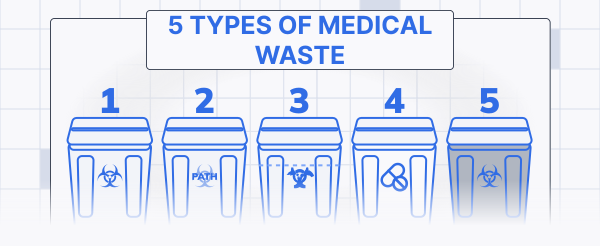
Biohazard Wastes
This type of waste is contaminated with blood or other potentially infectious materials and is often referred to as red bag waste. Biohazardous wastes like contaminated PPE, waste blood, and bodily fluids contaminated with blood are all biohazards.
Sharps Wastes
Sharps waste is a stream of biohazard waste which has the ability to pierce skin. Sharps wastes such as used needles, syringes, and lancets are all RMW.
Pathological or Anatomical Wastes
Pathological waste is human or animal body parts, tissues, fluids, and carcasses removed during surgery or autopsy.
Trace Chemotherapy Wastes
Waste that contains trace amounts of chemotherapeutic agents from items used in the administration of chemotherapeutic treatments.
Laboratory Wastes
Cultures, stocks, and other laboratory wastes capable of transmitting infectious disease.
Other Wastes
Alongside your typical medical waste streams, your facility may also have hazardous wastes. Hazardous wastes are defined under the RCRA - which can include some pharmaceutical wastes, bulk amounts of chemotherapy waste, and even hand sanitizer.
Basics of Regulated Medical Waste Management
In handling regulated medical waste, there are many steps to take to ensure compliance with your local regulations.
There are regulations along every step of the process from training, generating, handling, labeling, segregating, storing, and disposing of medical waste.
1) Always refer to medical waste information in your state
Regulations differ by state and it is important you are following regulations local to you. The examples of what differs are endless - but just know that the regulations involved with RMW are specific to your state. By following medical waste information and regulations in your state, you can ensure
2) Segregate your medical waste streams
At the point of generation, you should always classify and segregate your medical waste into the appropriate container. For example, sharps waste must go into a sharps container. Since sharps have the capability to pierce skin, they can also pierce through your red bags and a sharps container helps contain sharps and prevent injury.
Additionally, each stream of RMW may have a different required treatment method, and proper segregation ensures proper treatment at the final stage of disposal.
3) Labeling, Containers, and Accumulation Areas
All of your medical waste containers should be labeled with the type of waste it contains.
For example, a biohazard waste container would have the international biohazard symbol and a label that reads Biohazardous Waste. You should store these containers in your designated accumulation area and check your local medical waste regulations to ensure all labels, containers, and accumulation areas meet all the necessary requirements.
4) Disposal of RMW
Each stream of waste you generate may have a different allowed storage time. For every stream of waste you generate, you should be sure that your waste is collected and disposed of within a complaint timeframe. Typically, this involves a medical waste disposal company coming to your facility, collecting the waste, and sending you all the proper tracking and destruction documentation for your records.
Remember - these are only a couple of the basics for regulated medical waste. For detailed information on California medical waste compliance, refer to the California Medical Waste Management Act or contact a medical waste disposal company in California (like us).